
Fiji is a small country with an unusually strong sports identity. Rugby is part of everyday life, mobile access is widespread and most adults can be reached through a relatively small number of cities, communities and digital channels. That creates an attractive opportunity for someone who understands local bettors and knows how to organise a trusted customer network.
The best route is not necessarily to finance a national sportsbook from the beginning. A local entrepreneur can start as an agent, develop a territory as a master agent or launch a branded operation through an established platform. Investment should grow only after real customers prove the network’s value.
Is Fiji a Good Market for a Sportsbook?
Fiji had approximately 934,000 people in late 2025. That is not a huge national audience, but the market is highly connected and concentrated enough for a strong local operator or master agent to become visible quickly.
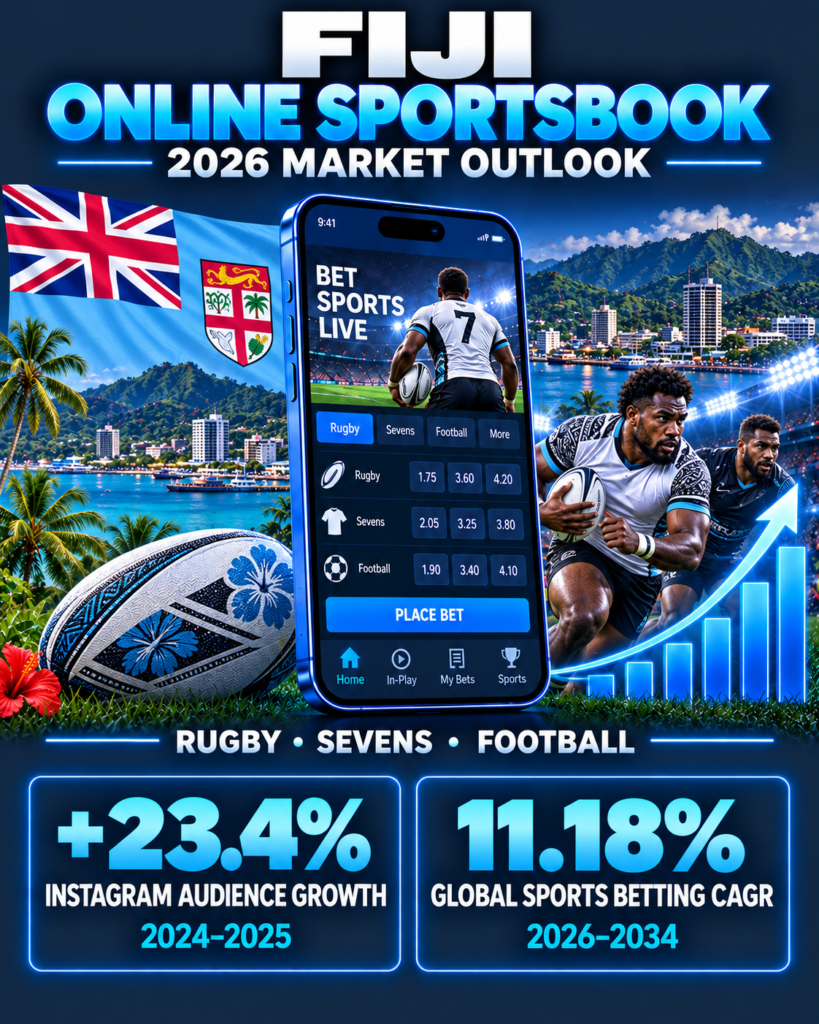
According to DataReportal’s Digital 2026 report for Fiji, the country had 741,000 internet users and 1.42 million mobile connections at the end of 2025. Internet penetration stood at 79.3%, while active mobile connections were equal to 152% of the population. Fiji also had 569,000 social media identities, and that audience grew by 6.4% in one year.
These are strong conditions for a mobile sportsbook. Customers are already accustomed to using phones for communication, banking, entertainment and social media. A simple betting platform can reach much of the commercially relevant adult population without building a large retail network.
Sport provides the main reason to enter. Fiji is one of the world’s best-known rugby nations. Rugby union and rugby sevens create national attention, while the Fijian Drua, Pacific Nations Cup, international tests and major global competitions provide regular betting events. The Fiji Rugby Union operates the country’s domestic and international rugby structure, giving the sport visibility throughout the year.
Rugby league, football, Australian rugby league, Super Rugby, cricket and combat sports can add volume. The sportsbook should still lead with rugby because that is where local emotion, knowledge and conversation are strongest.
Fiji’s tourism economy and worldwide diaspora can strengthen brand recognition, but the first business case should be based on local adult customers. One serious network in Suva, Nadi or Lautoka can be more valuable than a broad campaign with no trusted local face.
Legal Requirements for Sports Betting in Fiji
Gambling and betting activity in Fiji is controlled by local legislation, including the Gambling Act 2009, and operating or promoting a sportsbook may require local licences, permits and government approval. The treatment of a modern online sportsbook is not as publicly standardised as it is in larger regulated markets.
Before accepting bets, confirm the current position with the relevant Fijian authorities and qualified local advisers. An overseas platform licence does not automatically give permission to target Fiji, and the local company, payment model and agent structure may affect the required setup.
The idea can still be tested before major investment. Identify the territory, speak with potential agents, evaluate payments and measure genuine interest first. Once the network is proven, advisers can establish the appropriate structure.
Choose the Right Entry Model
The right model depends on what you already have. If your strongest asset is access to sports supporters, begin by monetising that access instead of trying to look like a fully financed international bookmaker.
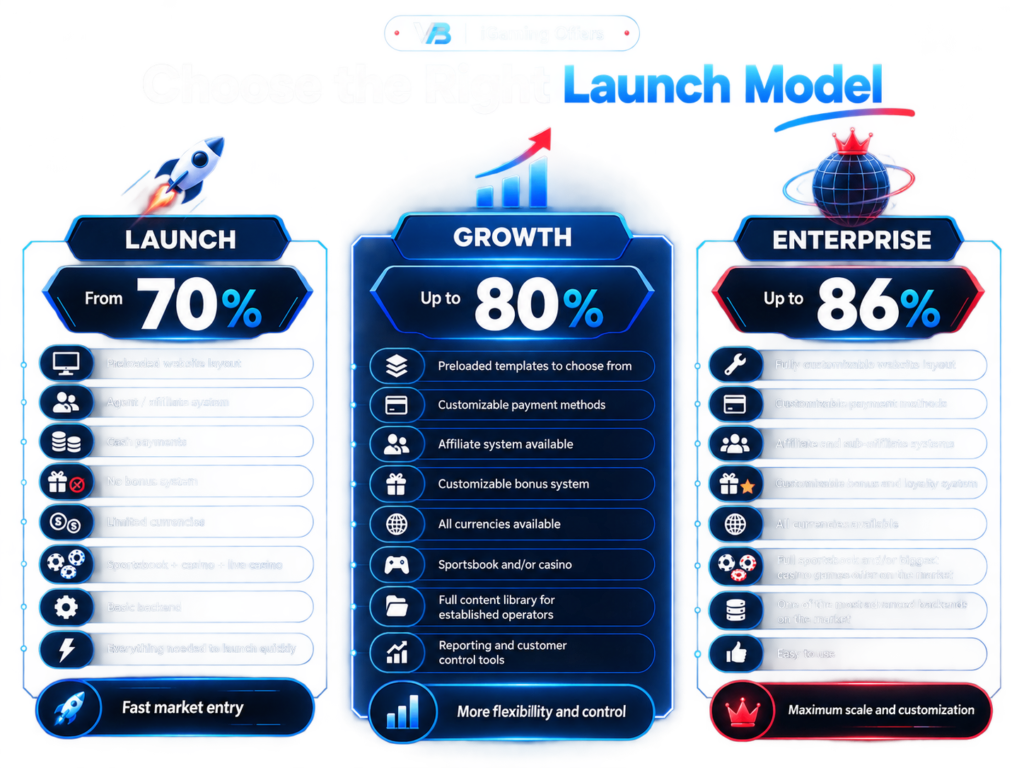
An agent model is the lowest-cost entry. The operator supplies the sportsbook, odds, wallet and backend. The local agent introduces players and earns an agreed commission. Where permitted, an approved agent may also support deposits and withdrawals.
A master-agent model suits someone who can manage agents across a city, island or larger territory. The master agent controls balances and earns from the network’s combined performance. Fiji’s size means a few reliable people can cover a meaningful share of the market.
A white-label sportsbook gives you a separate brand and customer-facing website while the provider supplies trading, feeds, risk tools, reporting and account management. This creates more control, but it also requires a marketing budget, customer support and a confirmed operating structure.
A turnkey sportsbook gives an established company greater control over product, payments and risk, but requires substantially more capital. Most first-time entrants should prove demand through an agent or branded partnership first.
Build a Sportsbook Fijian Bettors Understand
The sportsbook should be designed for mobile use from the start. Pages must load quickly, navigation should work with one hand and the bet slip must show the selection, odds, stake and possible return without unnecessary screens.
Rugby should have the strongest position on the home page. Create clear sections for Fiji matches, rugby sevens, Super Rugby Pacific, international tests and major club competitions. Rugby league, football, cricket, tennis, basketball and combat sports can support the wider schedule.
Pre-match betting will provide the easiest starting point. Match winner, handicap, total points and simple player markets are familiar and easy to explain. Live betting can increase turnover, but it should be offered only where the platform has reliable data and stable market suspension.
Use Fijian dollars as the main currency. English can cover the full product, while natural Fijian and Fiji Hindi communication may support selected audiences when the local partner understands them properly. The purpose of localisation is clarity and trust, not decoration.
Keep promotions simple. A welcome offer, selected odds boost and occasional reload bonus are enough. Customers stay because the sportsbook pays correctly, solves problems quickly and offers the matches they care about.
Payments and Player Operations
Fiji has better banking and mobile access than many smaller island markets, but the payment plan still needs local testing. The sportsbook should support practical bank, card, mobile-money and approved cash-assisted options where available.
Every payment provider must knowingly accept gambling transactions. Test deposits, withdrawals, minimum amounts and settlement times before launch. A payment logo on a provider presentation means nothing if the method cannot process a real Fijian customer’s transaction.
An approved agent network can help customers who prefer personal service. Each agent needs a defined balance, commission rate, transaction history and exposure limit. The operator must know who collected money, which account was credited and when a withdrawal was paid.
Fast withdrawals are one of the strongest sales tools in a small market. A satisfied customer will tell friends that the sportsbook pays. A delayed payout will travel through the same community even faster.
Customer support should be available during major matches, evenings and weekends. The backend must show deposits, active bettors, turnover, revenue, withdrawals and agent performance so the operator knows where to invest.
How to Find the First Customers
The first customers should come from a defined local network. Sports clubs, rugby communities, hospitality, transport, workplaces, entertainment venues and active social groups can all produce valuable introductions.
Start with one territory. Recruit a few reliable agents, give them clear rules and measure actual depositing customers. Do not appoint a master agent because somebody claims to know everybody. Promote the person who brings active bettors, settles correctly and communicates consistently.
Fiji’s social platforms make targeted acquisition realistic. Social media identities grew by 6.4% in the year to late 2025, while Instagram’s potential advertising reach increased by 23.4%. Match previews, rugby content, community pages and direct recommendations can introduce the brand where gambling promotion is permitted.
Rugby creates a natural marketing calendar. Fiji internationals, rugby sevens tournaments, Fijian Drua matches, Pacific competitions and global events provide regular moments when supporters are already paying attention. Promotions should connect to those moments rather than appear randomly.
Track every registration and deposit by source. Judge agents by active customers, repeat deposits and clean settlements, not by promises. In a market of this size, a few hundred regular players can support a meaningful operation if acquisition costs and payment losses remain controlled.
How Much Does It Cost?
With less than EUR1,000, you can research the market, approach platforms, test your network and identify potential agents. This is a validation stage, not a complete sportsbook launch.
With EUR1,000 to EUR5,000, you can build a landing page, create local content, organise initial agents and prepare a proposal for a sportsbook partner.
A white-label sportsbook can begin around EUR10,000 to EUR30,000, depending on design, feeds, payments and operational support. Licensing, local company costs, marketing capital and player balances may sit outside that estimate.
A serious turnkey operation can require EUR50,000 to EUR150,000 or more. It offers greater control but also creates responsibility for technology, trading, risk, payments, customer service and daily operations.
Spend according to evidence. If one Fijian territory produces active bettors and repeat deposits, the operation can add agents and improve the product. If the network produces only interest, a more expensive platform will not fix the problem.
How VB iGaming Can Help
VB iGaming helps entrepreneurs, network owners and established companies choose a practical route into sports betting.
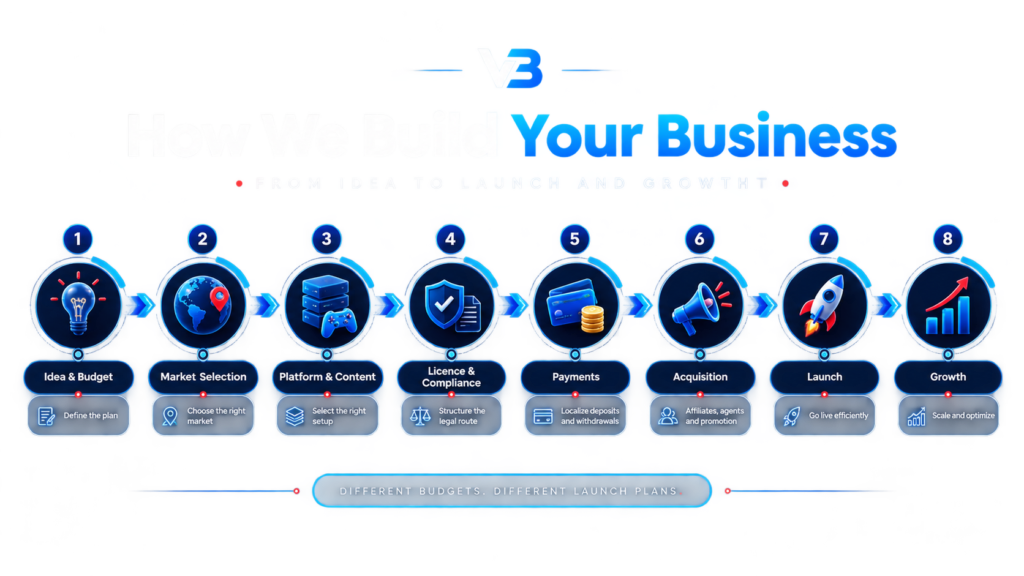
We can compare platforms, agent systems, payments, odds feeds and commercial terms, then determine whether the opportunity should begin as an agent account, master-agent territory, branded white label or larger operator project.
Fiji needs a product built around rugby, mobile access, local payments and trusted distribution. The right provider must support those realities instead of forcing the market into a model designed for a much larger country.
If you know people who bet, can organise reliable agents or already control an audience around sport, you may have the most valuable part of the business. The next step is to show where the customers are and how you can reach them.
Contact us through the form below for more information. Tell us about your network, target area and what you want to build. We will evaluate the opportunity and identify the most practical route forward.
Interested in casino instead? Read our guide to starting an online casino in Fiji.
Disclaimer: This article provides general business information and is not legal advice. Gambling, advertising and payment requirements can change. Confirm the current rules with the relevant Fijian authorities and qualified local advisers before operating, promoting or accepting bets.
- How to Become a Betting Agent in 2026 + Contact
- How to Start Your Own Sportsbook in 2026 + Contact
- How to Start Your Own Online Casino in 2026 + Contact
- How to Enter the Online Gambling Market in 2026 + Contact
- How to Start an iGaming Business in 2026 + Contact
- How to Launch a White-Label Sportsbook in 2026 + Contact
- How Much Does It Cost to Start a Sportsbook in 2026? + Contact
- Sportsbook Business Model Explained: How Sportsbooks Make Money in 2026 + Contact
- Sportsbook Agent: What You Need to Know in 2026 + Contact
- Set Up an Online Gambling Site in 2026: What You Need to Launch + Contact
- Sports Betting Agencies: How They Work and How to Start One in 2026 + Contact
- Agent Betting: How the Betting Agent Model Works in 2026 + Contact
- White Label vs Turnkey Sportsbook: Which Is Better for Starting a Betting Business? + Contact
- How to Get an Online Gambling Licence in 2026 + Contact
- How to Start an Online Sportsbook Without Your Own Gambling Licence + Contact
- How to Build a Betting Agent Network + Contact